Griddle or grill: where should you start?
A griddle cooks on a flat steel plate and a grill cooks over grates. Here's how that changes your meals, cleanup and first purchase.
Research only. Compiled from manufacturer guidance, Amazon listings and NFPA safety information, read on November 1, 2026. Evidence labels explained.
This article has paid links: Sizzlefolk may earn a commission if you buy through them. As an Amazon Associate I earn from qualifying purchases. How affiliate links work here.
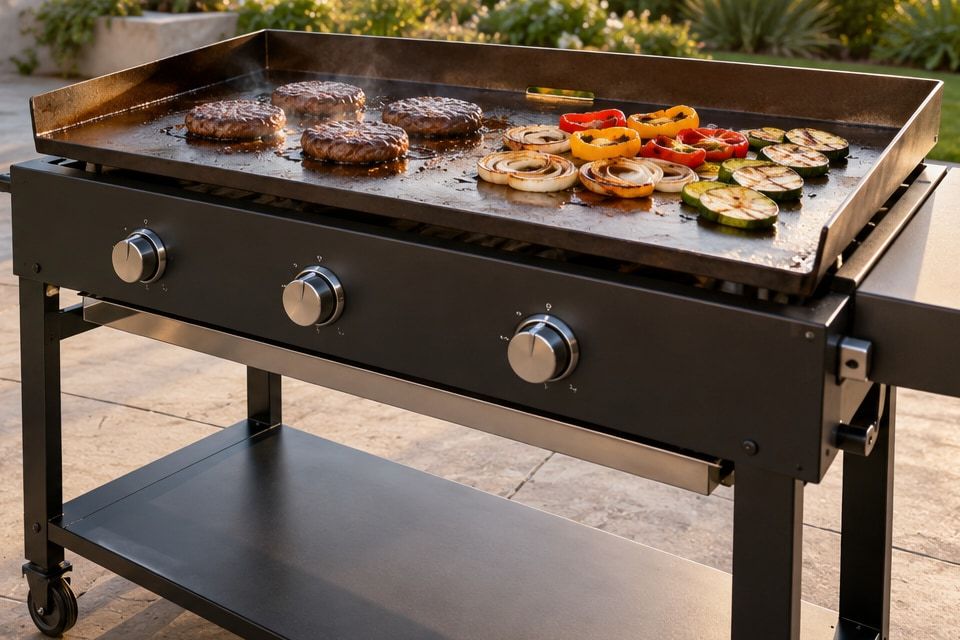
The main practical differences between a griddle and a grill. Details vary by model.
| Consideration | Griddle | Grill |
|---|---|---|
| Cooking surface | One flat steel plate | Open grates over the heat |
| Heat reaches food by | Contact with the hot plate | Direct heat through the grates and hot air under the lid |
| Suits | Eggs, pancakes, smash burgers, chopped vegetables and rice | Steaks, chops, ribs, whole chickens and roasts |
| Small or loose food | Stays on the plate | Can need a basket or pan |
| Grease | Runs to a cup or tray you empty | Falls through the grates to be cleaned out below |
| Surface care | Bare steel needs seasoning and oil to resist rust | Grates need brushing and cleaning; check your manual |
| Slow cooking with a lid | Not its main strength | Built for it with indirect heat |
Choose a griddle if you picture breakfast, smash burgers and stir-fries. Choose a grill if you picture steaks, ribs and whole chickens. Neither is better overall. They cook differently, so the right one depends on what you’ll make most often.
A griddle may fit if
- You want to cook breakfast outside
- You like small or chopped food that would fall through grates
- You want to cook several things at once on one surface
- You’re happy to oil the surface after each cook
A grill may fit if
- You mostly cook thick steaks, chops and bone-in chicken
- You want to cook low and slow with the lid closed
- You want grill marks and flavor from drippings hitting the heat
- You’d rather not keep a steel plate seasoned
How each one cooks
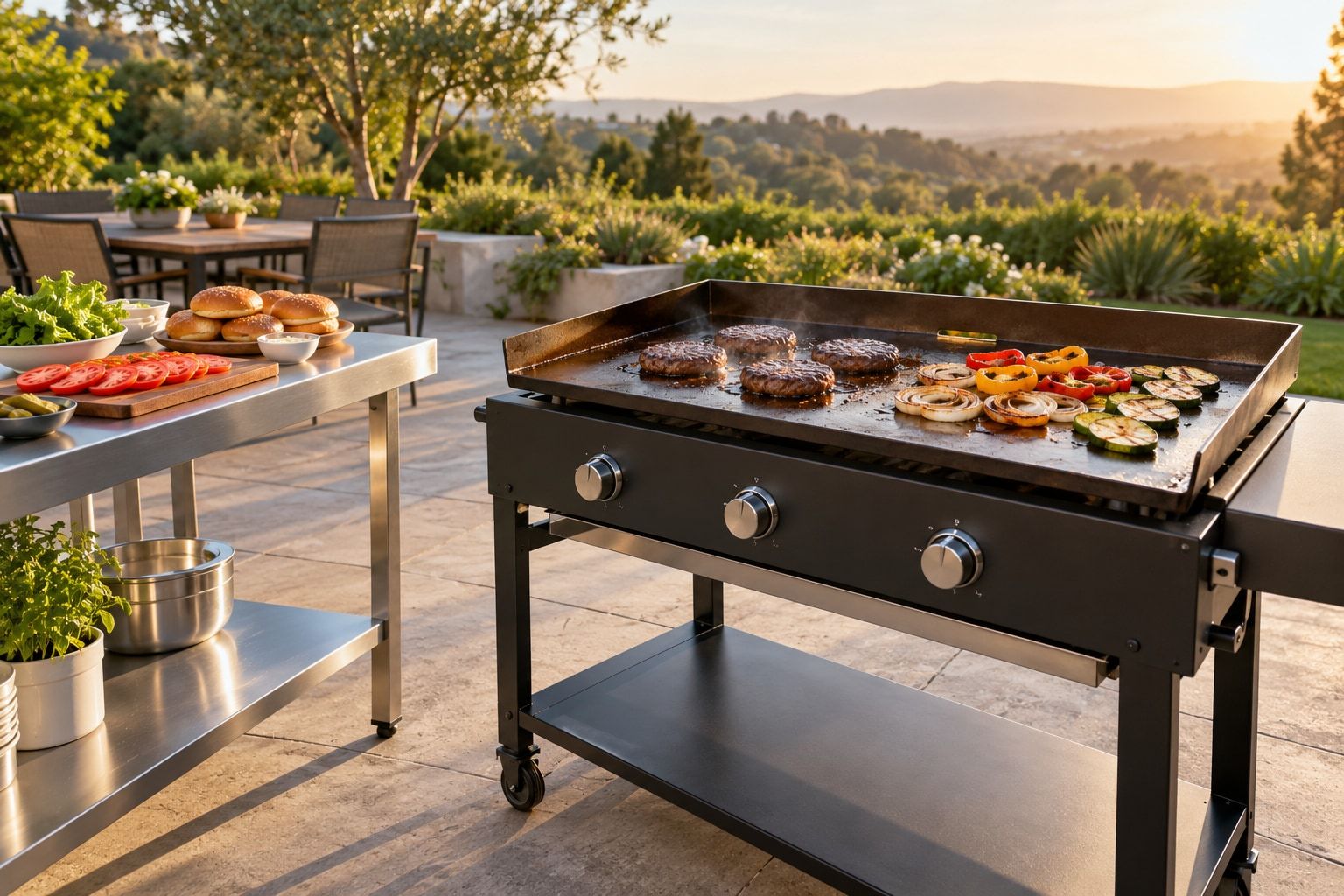
A griddle heats a flat steel plate, and the food sits on it. That full contact browns the whole surface of the food. It’s also why eggs, pancakes and chopped vegetables work so well: nothing falls through, and the whole plate is usable.
A grill puts food on open grates over the heat. Weber describes two ways to set up a gas grill. Direct heat puts food right over the burner, for things that take under 20 minutes, like burgers, steaks, fish and chicken breast. Indirect heat keeps the burner under the food off, with heat on one or both sides and the lid closed, for food that takes longer than 25 minutes or would dry out or scorch over direct heat. That second setup is what lets a grill take on ribs, roasts and whole chickens.
That’s the biggest practical gap. A griddle excels at fast, hot, contact cooking, while a grill also gives you a slow-cooking option.
What cleanup looks like
Griddle. You clean right after cooking while the surface is warm: scrape it, wipe it, use a little water on anything stuck, then leave a thin layer of oil on the steel. Grease runs to a cup or tray that you empty. Blackstone warns that steel left exposed to water and air will rust, so that last layer of oil matters, especially in humid places or by the coast.
Grill. There’s less surface care between cooks, but grease and debris fall into the space below the grates, and that needs cleaning out too.
Neither gets to skip this. NFPA says the grill hadn’t been cleaned in roughly one in five grill fires in its 2020 to 2024 figures. Pit Boss makes the same point about griddles: grease fires come from too much debris on the cooking components, so clean the inside regularly.
The rules are mostly the same
Space and safety don’t really separate the two. Both need open air around them, away from the house, railings and overhangs. Both should only be used outdoors, and propane models need the same leak checks. NFPA also advises keeping children and pets at least three feet away, and never leaving a lit grill unattended, which applies just as well to a griddle.
Measure your space and read the manual either way. The griddle buying guide covers what to measure.
Not ready to choose? Try griddling first
If you already own a grill, you don’t have to buy a second cooker to find out whether you like griddling. A cast-iron griddle plate can go on what you have. Lodge’s 10.5-inch reversible grill/griddle was listed at $29.95 on November 1, 2026. It’s small, so it won’t feel like a full griddle, but it’s an inexpensive way to try eggs or smash burgers outside. Check that it fits your grill, and that your grill’s manual allows it.
The short version
- Mostly breakfast, burgers, stir-fries and feeding people quickly: start with a griddle.
- Mostly thick cuts, ribs and whole chicken: start with a grill.
- A real mix: think about the last ten meals you’d have liked to cook outside, and go with whichever fits more of them.
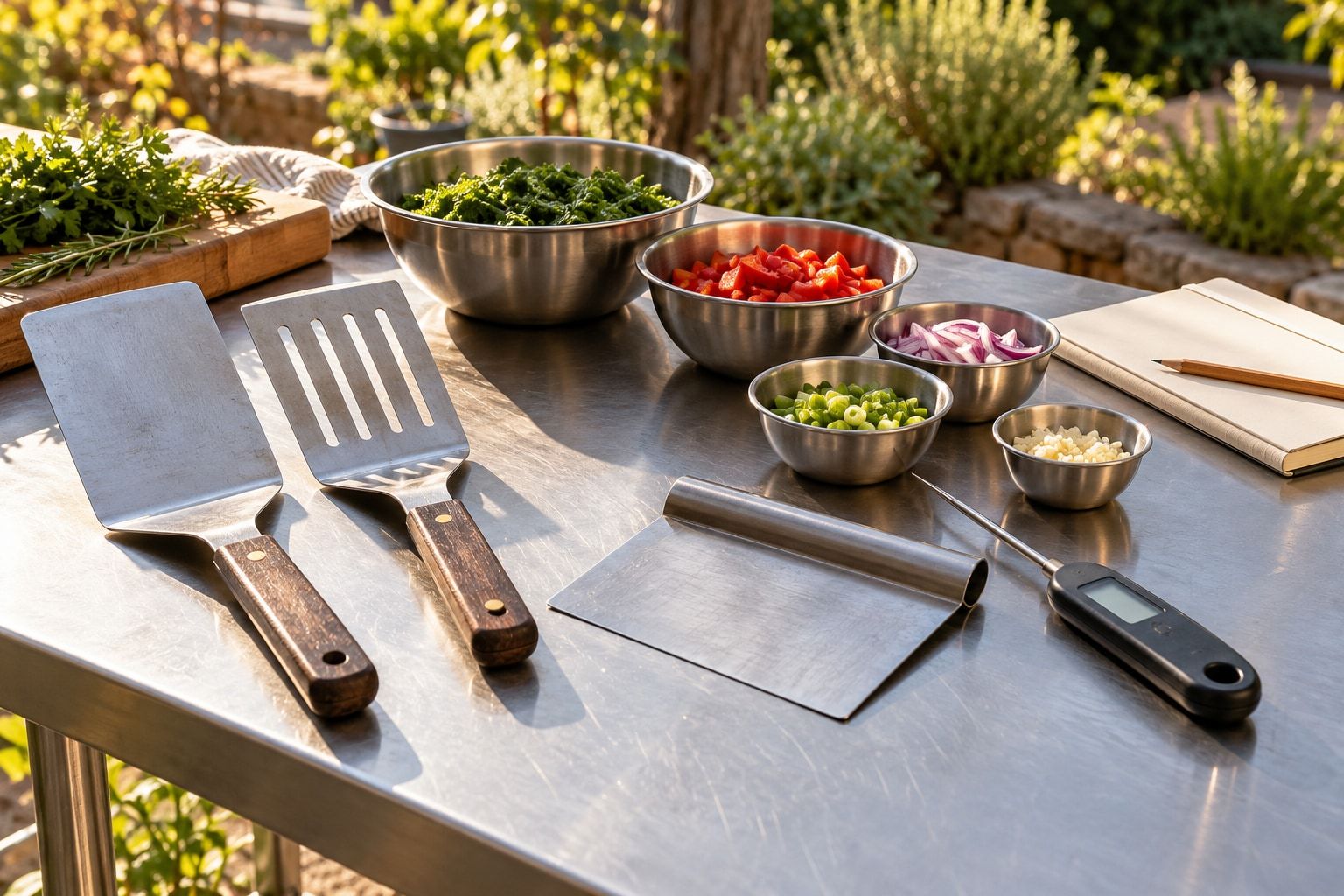
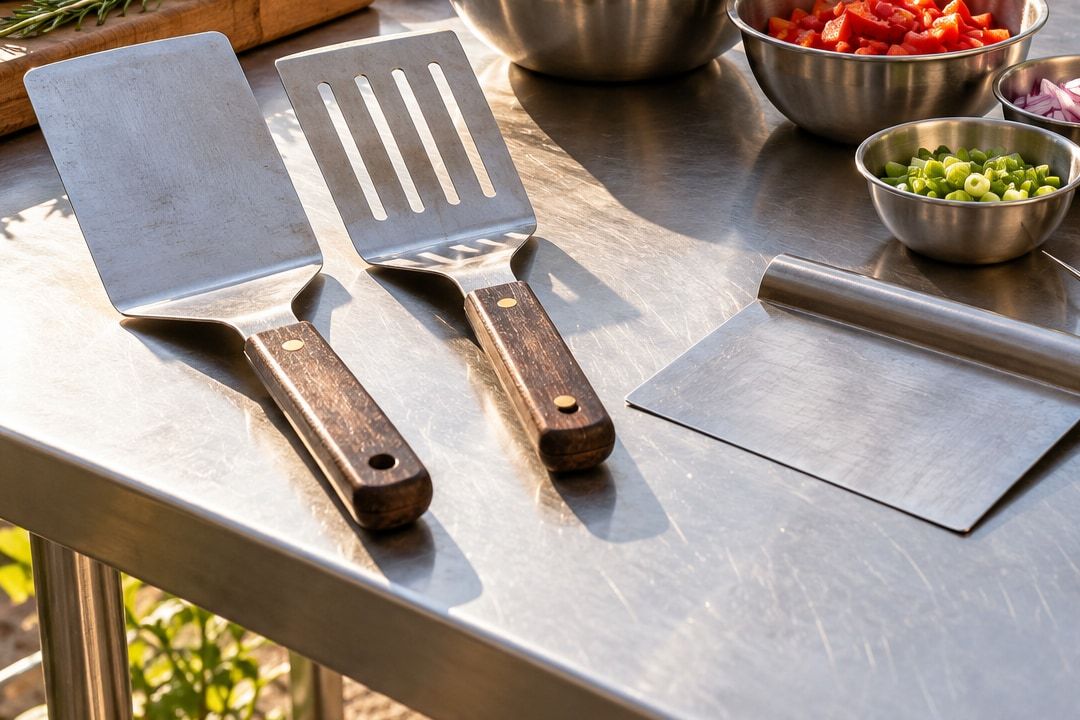
If it’s a griddle, the buying guide has one to look at in each size, and here are the tools you’ll actually need. Shopping for someone who already cooks on one? Try these griddle gift ideas.
This article has paid links: Sizzlefolk may earn a commission if you buy through them. As an Amazon Associate I earn from qualifying purchases. How affiliate links work here.